

Start Small
Software Discovery & Prototyping
Bring us the problem or the idea. We'll help you figure out what to build, or test the hardest part before you commit to a full project.
Some projects are clear from the first call. Others aren’t. You know a process, a system, or an idea isn’t working, but you can’t yet say what the software should do or what it would take. That’s where we start.
Discovery gives you a plan and a realistic estimate. A prototype lets you see the riskiest part working. Do one, do both, or skip them and go straight to a proposal.
Before You Build
Not Sure What It Will Take? That's Normal.
Most people who call about custom software can describe the problem. Fewer can describe the solution. Almost nobody knows the price until someone has looked closely at the work.
A short, paid discovery turns a rough idea into something you can plan around. It also tells you honestly when you don’t need custom software at all.
Discovery or a prototype may make sense when:
-
You know the problem but not what the software should do.
-
The quotes you've seen are far apart, or vague.
-
You're deciding whether to build, buy, or keep what you have.
-
Several people want different things and nothing is written down.
-
You need a budget number before you can get approval.
-
The idea depends on one thing working, and you'd like to see it work first.
-
You inherited a system and don't know how risky it is to change.
-
You want a second opinion before you sign a large contract.
Why Start Here
A Small First Step Costs Less Than a Wrong Turn
Many of the costliest software problems start early. The wrong thing gets built, a risk goes unnoticed, or the scope grows because nobody wrote it down.
Discovery and prototyping catch those problems while they’re still cheap to fix. Both have a fixed scope and stay small on purpose.
Neither one is required. If your project is already clear, we’ll go straight to a proposal.
It's better to learn what a project needs before you pay to build it.
Two Ways to Start
Pick the Starting Point That Fits
Each option has a fixed scope, is led by a senior engineer, and ends with something you can keep. We quote the fee after a short conversation, so you know the number before anything starts.
Discovery & Planning
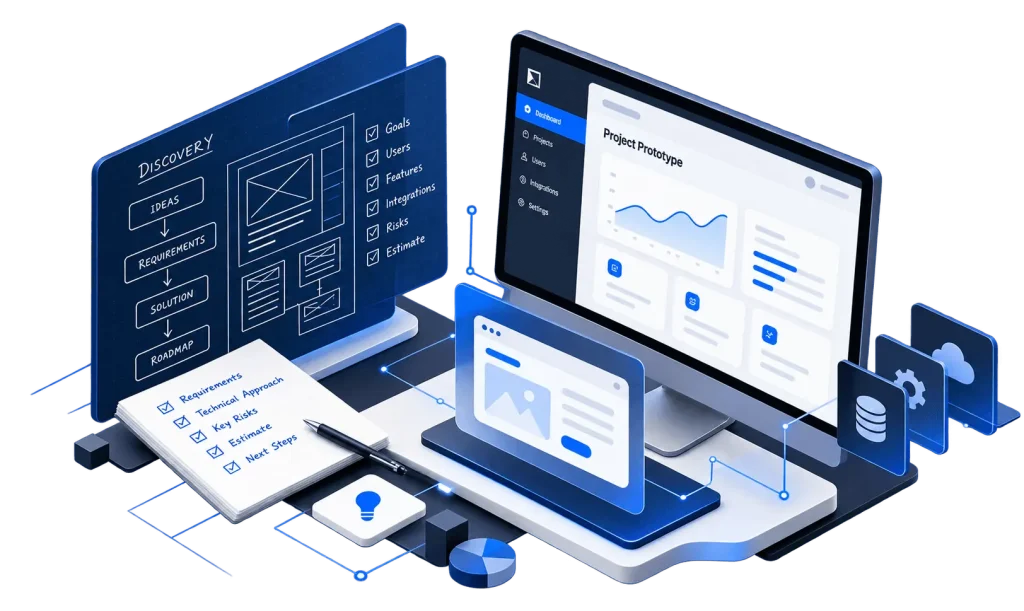
For when you understand the problem and want technical guidance before you decide to build. We spend a focused 5 to 10 hours on your workflows, systems, and risks, starting with a 60 to 90 minute working session. Then we write it up as a Discovery Brief: your requirements, whether to build or buy, the recommended approach, key dependencies and risks, and a preliminary development roadmap. When the requirements are defined well enough, it also includes an implementation estimate or proposal.
Prototype & Concept Validation
For when one part of the idea carries the risk and you want to see it working before you invest in the rest. We build one narrow feature or workflow with realistic sample data, add a simple interface if it helps, and take one round of consolidated feedback. You get a working demo and our recommendations for building it properly.
This is a prototype, not a finished product. Hosting, complex sign-in, large integrations, and ongoing support aren’t included.
How Discovery Works
From First Call to a Plan You Can Use
Discovery is short on purpose. Here’s what happens.
Short Intake
Tell us about the problem on the form or in a quick call. We’ll say whether discovery fits and what it will cost before anything starts.
Working Session
A 60 to 90 minute conversation about your process, your systems, and what a good result looks like for you.
Review and Analysis
We go through the workflows, data, and tools involved, and think through build, buy, and the risks.
The Discovery Brief
You get a concise Discovery Brief covering your requirements, the recommended approach, key dependencies, risks, and a preliminary development roadmap, plus an estimate or proposal where the requirements are clear enough.
It’s yours to keep.
How a Prototype Works
From One Risky Idea to a Working Demo
A prototype tests one thing. We keep it narrow so you get an answer quickly.
Choose the One Thing
We agree on the single feature or workflow to test and what “working” should look like. We write that scope down before any building starts.
Build the Demo
We build it with realistic sample data, limited integrations, and a simple interface where it helps.
Review Together
We walk through it with you and take one consolidated round of feedback.
Recommendations
You get our recommendations for building it properly, including what a production version would need.
Is This Right for You?
Start With Discovery, or Go Straight to a Proposal
Discovery is optional. Here’s a quick way to tell which route fits.
Discovery may make sense when:
-
The problem is clear but the solution isn't.
-
You need a realistic estimate to get approval.
-
You're weighing build, buy, or keep.
-
Several systems or people are involved and nothing is written down.
-
You want an outside opinion before a big commitment.
A direct proposal may make sense when:
-
Your requirements are already written down.
-
The scope is well defined and the systems are known.
-
You've built something like it before and know what you want.
-
You're ready to start soon.
-
You already have a budget in mind.
What You Keep
A Plan That Works With Us or Without Us
The Discovery Brief is yours. Use it to move forward with Arch Studios, take it to another developer, or hold onto it until the timing is right.
That’s how we’d want to earn your trust. A plan that only works if you hire us isn’t much of a plan.
Either way, you’ll know more than when you started.
Software Discovery FAQs
How much does discovery cost?
It’s a fixed fee, set after a short conversation about your project. A small internal tool takes less digging than a portal that connects several systems, so the fee depends on the size of the work. You’ll know the number before anything starts.
Do I have to do discovery before a project?
No. If you already know what you need, we can go straight to a proposal.
What's the difference between a prototype and an MVP?
An MVP is a first version people can really use, with sign-in, stored data, security, and support behind it. A prototype shows one idea working so you can judge it. Ours is a prototype. If it holds up, building the real version is the next step.
Can I take the plan to another developer?
Yes. The Discovery Brief is yours to keep and use however you like.
What if discovery says I shouldn't build anything?
Then we’ll tell you. Sometimes the right answer is an existing product or a smaller fix, and you’ll have spent a little to find that out.
Does the prototype include hosting or ongoing support?
No. Hosting, complex sign-in, large integrations, and support are outside the base scope. We’ll note what a production version would need.
How is this different from the Introductory Project Program?
The program offers introductory pricing on a few qualifying development projects. Discovery and prototyping are for deciding what to build, and they’re open to anyone.
Start a Project
Tell Us What You're Trying to Figure Out
Describe the problem, the idea, or the system you’re unsure about. We’ll tell you what we’d suggest, and whether discovery makes sense.